
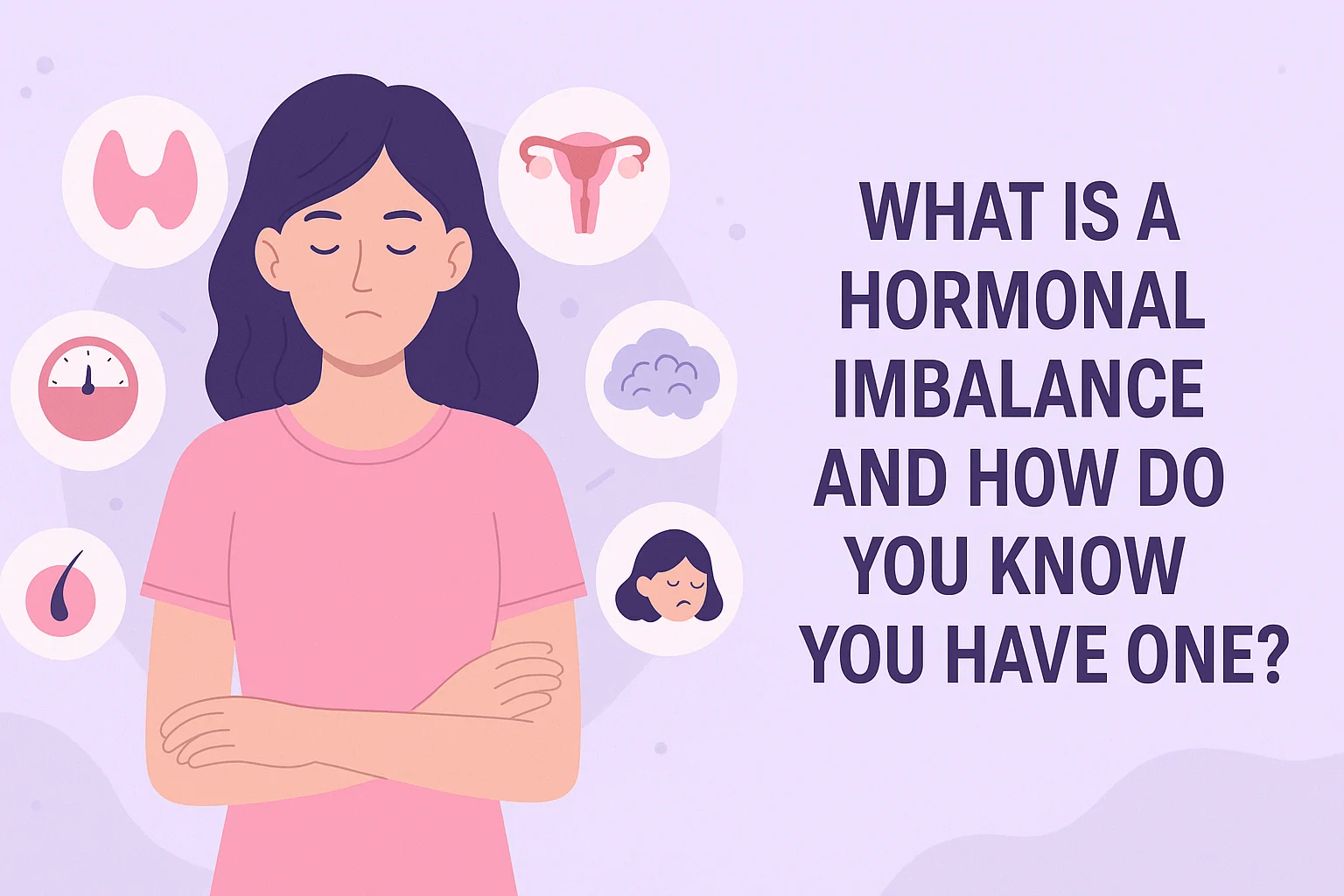

If you’ve ever wondered why your mood suddenly swings, your periods act up, or your skin won’t stop breaking out—there’s a strong chance your hormones are involved.
Hormonal imbalance is one of the most underdiagnosed issues in women. It hides in plain sight—often brushed off as stress, age, or “just being a woman.”
In this blog, we’ll break down what hormonal imbalance really is, how to spot the signs, what causes it, and how to start healing—with clarity, not confusion.
💡 What Are Hormones, Really?
Hormones are chemical messengers in your body that tell your organs, skin, brain, and reproductive system what to do. They’re released by glands in your endocrine system and play a role in everything from:
- Menstrual cycle
- Metabolism
- Sleep
- Mood
- Sexual health
- Skin and hair
- Fertility and pregnancy
Think of them as WhatsApp messages being sent 24/7 inside your body. If even one gets delayed, misfired, or overloaded, everything can feel “off.”
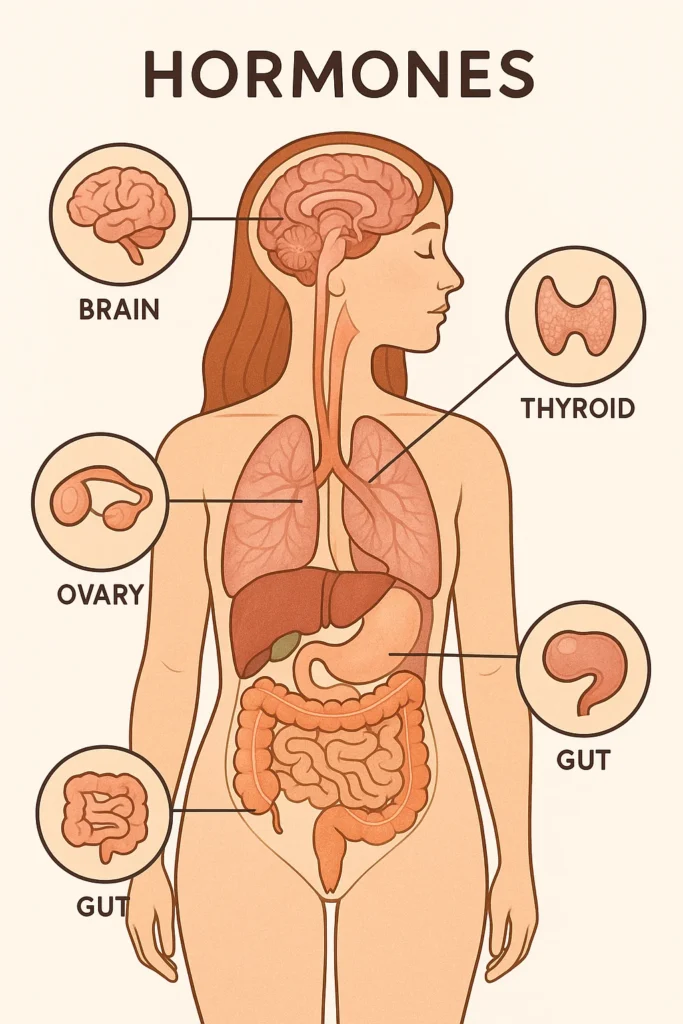
⚖️ What Is a Hormonal Imbalance?
A hormonal imbalance happens when you have too much or too little of one or more hormones in your body.
Even tiny changes can lead to big symptoms because hormones are powerful—even in small amounts.
It can affect women of all ages and stages:
From teenagers to women trying to conceive, to new moms, to those nearing menopause.
🚨 10 Common Signs of Hormonal Imbalance in Women
You don’t need all of these to be affected. Even 2–3 persistent symptoms are worth investigating.
1. Irregular or Missing Periods
- Skipping months
- Long cycles (35+ days)
- Very short cycles (<21 days)
- Spotting between periods
Often linked to PCOS, thyroid problems, or stress.
2. Unexplained Weight Gain or Loss
- Especially around the belly or hips
- Difficulty losing weight despite diet/exercise
Could be due to cortisol (stress hormone), insulin resistance, or estrogen imbalance.
3. Severe PMS or Mood Swings
- Feeling irritated, sad, or anxious before periods
- Crying without reason
- Overreactions that feel “not like you”
Often caused by fluctuations in estrogen and progesterone.
4. Fatigue and Low Energy
- Tired even after sleep
- Brain fog or lack of focus
- Mid-day crashes
Could indicate thyroid dysfunction or adrenal fatigue.
5. Acne and Oily Skin (Especially on Chin or Jawline)
- Persistent breakouts in lower face region
- Cystic or hormonal acne
Androgens (male hormones like testosterone) can be the culprit.
6. Hair Loss or Hair Thinning
- Increased hair on pillow or comb
- Thinning near scalp or crown
- Hair falling in clumps
Often related to thyroid, PCOS, or low estrogen.
7. Sleep Issues or Insomnia
- Trouble falling asleep
- Waking up often at night
- Still tired in the morning
Progesterone helps you sleep—low levels can cause restlessness.
8. Low Sex Drive
- Lack of interest in intimacy
- Vaginal dryness
- Pain during intercourse
Hormones like estrogen, testosterone, and DHEA play a big role here.
9. Digestive Issues
- Bloating
- Constipation or diarrhea
- Food intolerances
Estrogen and cortisol can affect gut health and digestion.
10. Hot Flashes or Night Sweats (Not Just in Menopause)
- Sudden feelings of heat
- Excessive sweating at night
- Flushed face or chest
Could be due to low estrogen or changes in brain hormone signals.
🧪 What Causes Hormonal Imbalance?
Hormones are sensitive to everything. Some common causes include:
- Stress: Overproduction of cortisol messes with estrogen, thyroid, and insulin.
- Poor diet: Sugar, processed food, and low protein disrupt hormonal balance.
- Sleep deprivation: Messes with melatonin, insulin, and ghrelin.
- PCOS (Polycystic Ovary Syndrome): Common condition involving excess androgens.
- Thyroid disorders: Hypothyroidism or hyperthyroidism affect energy and weight.
- Birth control pills: Can suppress or override natural hormone rhythms.
- Menopause or perimenopause: Natural decline in estrogen and progesterone.
- Medical conditions: Like diabetes, fibroids, or adrenal dysfunction.
🩺 How Is It Diagnosed?
If you suspect hormonal imbalance, your doctor may recommend:
- Blood tests (FSH, LH, estrogen, progesterone, testosterone, TSH)
- Ultrasounds (to check ovaries or thyroid)
- Saliva or urine hormone testing
- Symptom history & menstrual tracking
Keeping a detailed symptom log helps your doctor connect the dots.
🌿 Natural Ways to Support Hormonal Balance
You don’t need to jump straight into medications. Many women see improvement with lifestyle changes:
✔️ Eat Hormone-Friendly Foods:
- Healthy fats (avocados, nuts, seeds)
- Cruciferous veggies (broccoli, cauliflower)
- Complex carbs (quinoa, oats)
- Herbal teas (spearmint, fennel, chamomile)
✔️ Manage Stress:
- Deep breathing
- Gentle exercise like yoga or walking
- Journaling or guided meditation
✔️ Improve Sleep:
- Stick to a sleep routine
- Avoid screens before bed
- Magnesium-rich foods or supplements
✔️ Ditch Endocrine Disruptors:
- Avoid plastic containers
- Say no to synthetic fragrances
- Use clean skincare and period products
📍 When to See a Doctor
If your symptoms are:
- Frequent
- Affecting daily life
- Not improving with lifestyle changes
… then it’s time to seek medical help. Hormonal imbalance is treatable, but the longer you wait, the harder it can become.
💡 Daimaa Can Help You Track and Understand Hormonal Patterns
Hormonal symptoms are tricky—they overlap and often go unnoticed. That’s why Daimaa helps you track your cycle, log mood and body changes, and gives smart insights that prepare you for better conversations with your doctor.
👩⚕️ Visit Daimaa.co and start chatting with your private women’s health assistant today. It’s free, 24/7, and made just for you.
✨ Final Thoughts
Hormonal imbalance is more common than we think—and much more manageable when caught early.
Your body always speaks. Through your skin, your periods, your energy, your sleep.
You just need to listen—and Daimaa is here to help you understand.